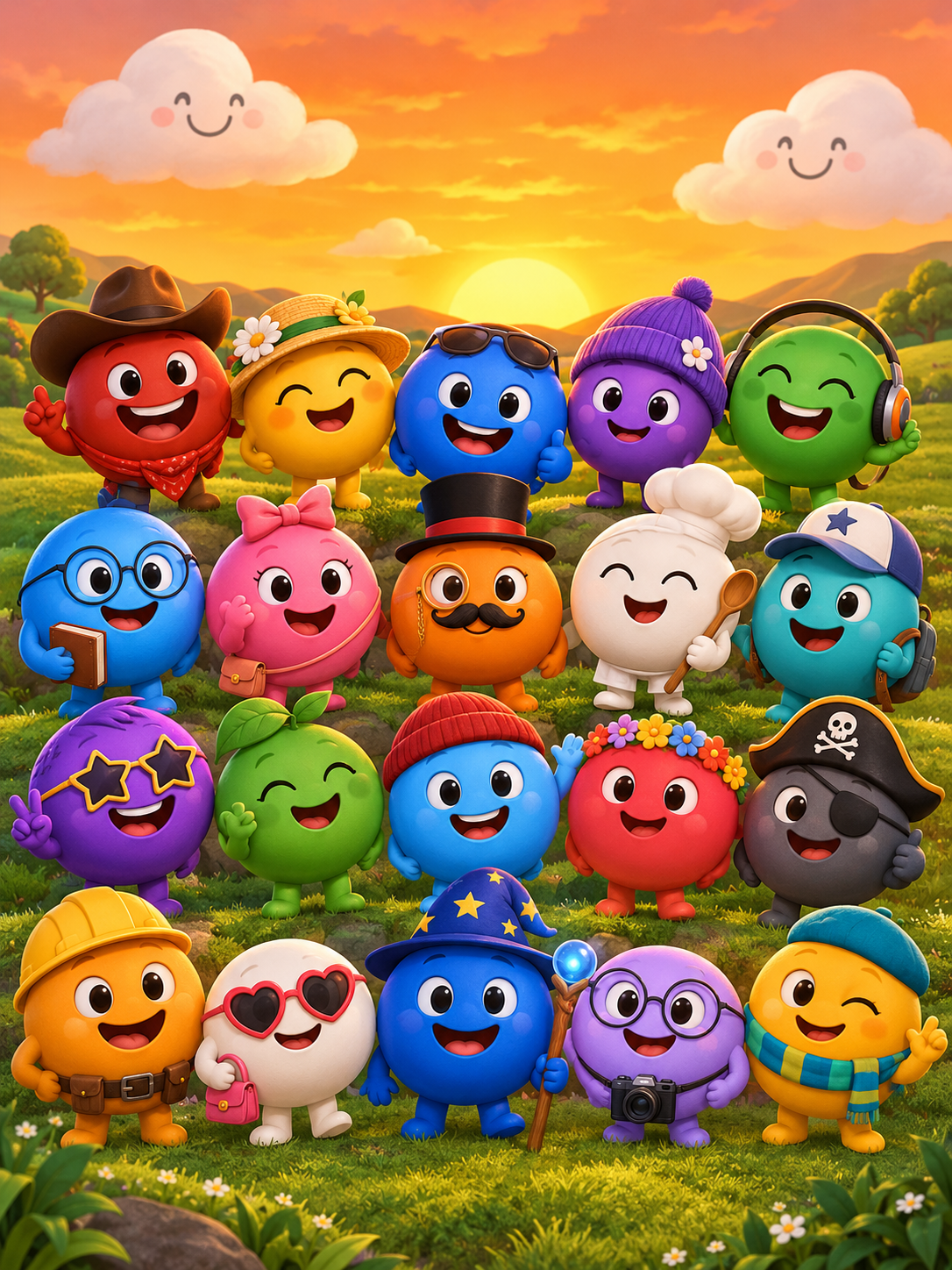
Verity is one of the six bonus tiles in the browser version of Sprunkity, while the seven circular performer faces on the stage are separate. The elaborate backstory and hidden-lore claims around Verity are fan interpretation, not confirmed game canon.
The short version
- Verity is a bonus tile in the browser game, not one of the seven main stage performers.
- The game is minimal: performer faces, sound tiles, drag-and-hover mixing controls, settings, and a creator gallery.
- The meme pattern leans on a smiling avatar, unblinking optimism, and a question-and-answer rhythm.
- Treat backstory, motives, and relationships as fan fiction unless you can verify them in the game or the creator’s own mix.
- If you make a video, build an original smiling character and label the output as AI-generated.
What the game actually shows
Sprunkity is a fan-made browser music-mixing game in the Sprunki family, created by sprunki1000 and published on itch.io. It is an HTML5/Scratch-style game: seven circular performer faces on stage, twenty main sound tiles in two rows, and six bonus tiles along the top. The stage is a warm orange sky with green hills and smiling clouds. The first load is about 56 MiB.
Verity is one of those six bonus tiles. The game files name only Verity among the bonus slots, so it is safer to describe Verity as the named bonus character rather than as a hidden eighth performer or a secret main-stage character. The creator’s own mix is the best place to hear how Verity is timed, how the catchphrase is used, and where the character sits in the arrangement. Do not repeat a specific catchphrase from a meme post unless you have checked it against the game or the creator’s mix.
The controls are simple and worth knowing before you write about the game. You drag a tile onto a face. You hover over a performer for mute, solo, and remove controls. The round arrow at the top right resets the mix. The menu at the top left opens settings for dark mode and accent colours, plus a creator gallery. Those features are the whole interaction model. There is no confirmed elaborate lore system inside the browser game.
A different, download-only game with the same name was made by TheGoodSprunkiOwner124 and has Phase 3, 4, and 5 releases for Windows, macOS, Linux, and Android. That is not the browser game described here. Keep the two separate when you write or make videos, because mixing their details creates false claims about both.
Where the meme comes from
The Verity meme does not need a complex story. It needs a face. The pattern is a smiling yellow avatar, an unblinkingly upbeat tone, and a question-and-answer format. Someone asks a question, the avatar answers with relentless cheer, and the mismatch between the question and the answer creates tension. The smile stays fixed. The voice stays bright. The answer may be unsettling precisely because it is delivered so pleasantly.
That format travels well because it is easy to remix. You can change the question, change the answer, or change the pace. The constant is the contrast between the cheerful surface and the uneasy implication. The meme does not require a confirmed hidden file, a secret phase, or a removed character. Those claims may appear in fan posts, but the pattern itself works without them.
The smiling yellow avatar also fits the game’s visual language. Sprunkity’s browser stage is bright and friendly: orange sky, green hills, smiling clouds. A character who matches that brightness but answers in an oddly direct way feels like part of the same world. That is why the meme feels native to the scene even when the specific lore is invented.
What is fan speculation
Backstory, motives, and relationships are the most common fan additions. A post may claim Verity is trapped, watching, warning the player, or connected to another character. Those ideas can be creative and useful for fan videos, but they are not confirmed canon. The browser game itself is minimal. It gives you tiles, faces, a stage, and mixing controls. It does not give you a long narrative explanation of Verity’s inner life.
This is where fan work needs a clear label. “Fan interpretation” is not a weakness. It is simply a different category from “confirmed by the game.” If you present speculation as fact, readers and viewers cannot tell where the game ends and the fan fiction begins.
| Confirmed by the game | Fan interpretation | Safe to say |
|---|---|---|
| Verity is one of six bonus tiles in the browser game. | Verity is a secret main performer or hidden eighth character. | Verity is a named bonus character, not a main stage performer. |
| The stage uses a warm orange sky, green hills, and smiling clouds. | The bright stage is proof of a coded horror story. | The bright surface can support a cheerful-horror reading. |
| The game files name only Verity among the bonus slots. | Every bonus slot has a separate official identity. | Only Verity is named in the bonus row. |
| The creator’s mix is the reference for Verity’s use and catchphrase. | The catchphrase is a magic code or hidden message. | Check the creator’s mix before quoting a catchphrase. |
| The game has settings and a creator gallery. | The gallery contains secret canon. | The gallery is a creator feature, not a lore source. |
Why the cheerful-horror contrast works
The cheerful-horror contrast works because the brain expects a bright smile to signal safety. When the smile is too fixed, the eyes too steady, or the voice too relentlessly positive, the signal becomes ambiguous. That ambiguity is the uncanny-valley effect: a humanlike thing feels slightly off, and the slight offness is more disturbing than an obvious monster. A clearly scary design tells you how to feel. A smiling avatar that keeps smiling while saying something strange leaves you to decide.
The contrast also gives the viewer room to participate. You notice the pause before an answer. You notice that the question was simple and the answer was not. You notice that the character never drops the cheerful tone. That participation is why the meme format spreads. It is not just a character; it is a repeatable structure: question, bright answer, uneasy aftertaste.
For video, the contrast is a timing problem more than a design problem. A ten-second clip can set up a question, deliver an upbeat answer, and hold on the smile for a beat too long. That final beat is often what makes the idea land. You do not need gore, a jumpscare, or an elaborate lore dump.
Making a Verity-inspired video without copying
The safe approach is to use the idea, not the asset. Build a smiling original character with your own palette and your own catchphrase. Do not rip the game’s art, trace the character, or present your version as the official Verity. If you use an image input, use a character image you have the rights to use. The tool accepts one character image in JPG, PNG, or WebP format, up to 10 MB. It can also work from a written prompt. Output is a 10-second, 720p, 9:16 silent MP4 generated with Seedance 2.0.
Here is a practical checklist:
- Define the character in one sentence: a smiling host, a cheerful guide, a too-friendly announcer, or another original role. Avoid naming the character Verity if the design is meant to be your own.
- Pick a palette that is not a copy of the game’s stage. A different sky colour, a different hill shape, or a different cloud style is enough to separate your work.
- Write a new catchphrase. Keep it short enough to fit a ten-second clip.
- Write a three-beat script: question, cheerful answer, one beat of silence. That structure fits the format without copying a specific scene.
- Choose one input method. Use a written prompt or one character image. Do not plan around multiple images, multiple models, custom audio, editing tools, or resolutions beyond 720p, because those are not offered.
- Add music you have the rights to use. The MP4 is silent. The tool does not supply custom audio.
- Label the result as AI-generated and as fan-made. Do not imply that it is an official release or that it uses the original game’s assets.
Every render costs 30 credits. New accounts start with 0 credits. There is no signup bonus, check-in reward, free preview, or watermark trial. Paid renders have no watermark. Failed generations return their credits automatically. Public plans and packs are listed on the pricing page; one-time credits never expire, monthly credits expire at the end of each billing month, and yearly credits are valid for the billing year.
Rights and safety
Rights in Sprunkity, its characters, and its art belong to their respective creators. The browser game is by sprunki1000. A different download-only game with the same name is by TheGoodSprunkiOwner124. Sprunki itself is a fan mod of Incredibox. sprunkity.org is an independent fan-made AI video tool inspired by the scene. It is not the game and is not affiliated with sprunki1000, itch.io, Incredibox, or TheGoodSprunkiOwner124.
Keep the work safe and clearly labeled. Do not sexualise minor characters or characters who read as minors. Do not impersonate the original creator, the game, or another real person. Label AI output. Do not present fan speculation as confirmed canon. Inputs and outputs are moderated, but moderation does not transfer ownership or permission. You still need rights to the image you upload and the music you add.
If you are writing about the meme, separate the confirmed game facts from the fan reading. If you are making a video, make an original character and an original scene. The idea of a smiling avatar with an unsettlingly cheerful answer is broad enough to support new work without copying the game’s art.
FAQ
Q: Is Verity a playable character?
Verity is one of the six bonus tiles in the browser game. The seven performers on stage are separate from the bonus row. You drag tiles onto faces to build a mix; Verity belongs to the bonus tile set, not the main stage cast.
Q: Is Verity’s backstory official?
Most backstory claims are fan interpretation. The browser game itself is minimal: it gives you a stage, seven performer faces, twenty main sound tiles, six bonus tiles, and mixing controls. It does not provide a detailed canon explanation of Verity’s motives, relationships, or hidden history. Check the game and the creator’s mix before calling a claim official.
Q: Can I make a Verity video?
Make an original character inspired by the idea. Use your own smiling avatar, your own palette, and a new catchphrase. Do not copy the game’s art or present your video as an official release. A 10-second, 720p, 9:16 silent MP4 is a good format for a short question-and-answer beat, but you must add music you have the rights to use and label the output as AI-generated.
Keep creating
If you want to map the cast before you design an original character, read Sprunkity characters. For a sharper ten-second script, use the structure in Sprunkity text-to-video prompts. Before you publish, check Sprunkity fan video rules. When you are ready to render, open Create and review Pricing.
Try the tool from this guide
Every render costs 30 credits. Failed generations return credits.
Make your Sprunkity video
Describe a 10-second Sprunkity-style scene. Seedance 2.0 creates it from your words alone.
Only selected results appear in our gallery after review. Your input remains private.
$19.90/ 30 credits
30 credits · 10 secondsEvery render costs 30 credits. One-time packs never expire; monthly credits last for the billing month.
Your videos
Describe a scene or upload a character image, then create your video.
Sprunkity
Sprunkity editorial team · Source and publishing references